
- Home
- Lifestyle
- The art of living in Provence
- Madder, the red gold of Vaucluse
Madder, the red gold of Vaucluse
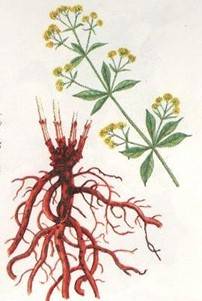
In the heart of the Vaucluse, long before lavender became the emblematic scent of Provence, other plants were already shaping the identity of the region: dye plants. Among them, madder holds a very special place. Cultivated since the Middle Ages, this plant with deep red roots once brought great prosperity to the area, particularly around Avignon and the Comtat Venaissin.
Madder, or Rubia tinctorum, was prized for the pigment it produced: an intense, long-lasting, and luminous red. Extracted from its roots, this natural dye was used to color textiles, including the famous red trousers of the French army in the 19th century. Its cultivation left a lasting mark on the agricultural landscapes of the Vaucluse, supporting a thriving local economy until the arrival of synthetic dyes.
Madder was not alone. Other dye plants were also cultivated in the region, such as woad for blues, weld for yellows, and walnut husk for brown tones. Together, they formed a true vegetal palette, reflecting ancestral know-how combining botany, craftsmanship, and trade.
Today, although these crops have almost disappeared, they are experiencing renewed interest. Artisans and enthusiasts are rediscovering these plants and their uses, embracing a more environmentally respectful and authentic approach.
Madder and dye plants tell the story of another Provence, lesser known, where color was born from the earth and time, and where every shade carried the imprint of a land and its history.