
- Home
- Lifestyle
- The art of living in Provence
- Provence, land of stone
Provence, land of stone
Stone, stones, are dominant elements in Provence, truly inscribed in a landscape that is more mineral than vegetal. Thus, man's relationship with stone has long been part of what the geographer Roger Livet called "the call of the rock".
The symbol is powerful and simple. Clinging to the slope, the Provençal village is anchored in the mother rock. Thus turned towards the sun, protected from the mistral wind, free from the icy or suffocating air of the valley, it watches who comes from afar and shows itself to the landscape.
Here, stone is everywhere. It is sufficiently rich or charged with meaning that there is much to learn from it.
Underground, it allowed prehistoric man to live in natural shelters.
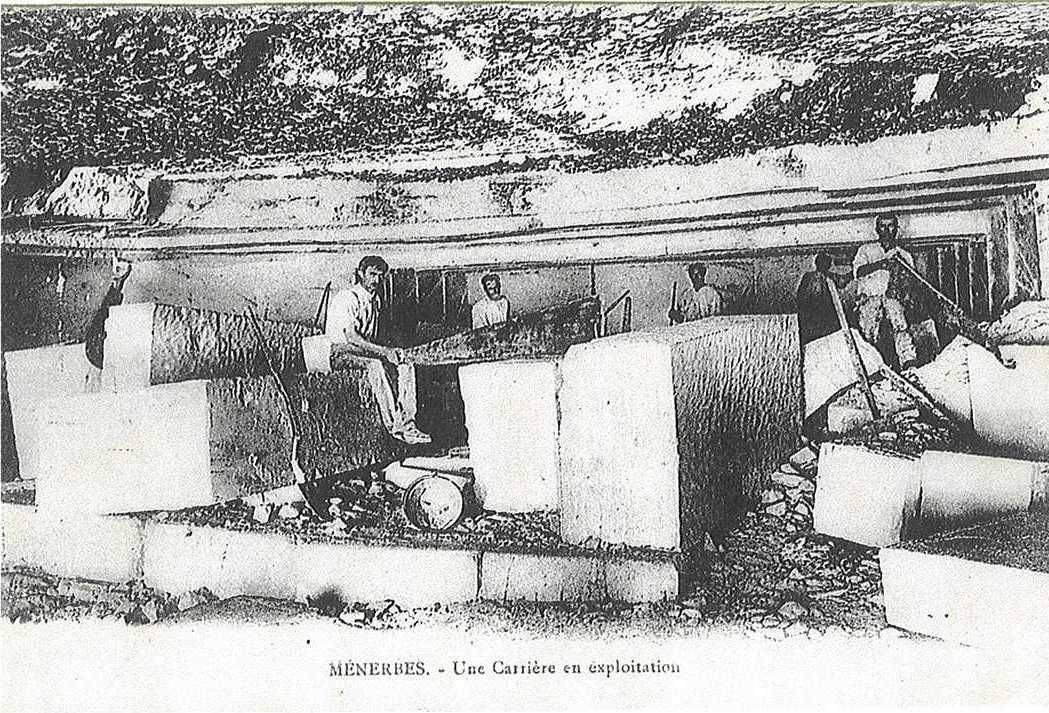
Worked, it was extracted in the form of geometric blocks in quarries that were used for the construction of various buildings.
By right of nobility, it builds civil or religious buildings, cut and assembled to perfection by craftsmen who have inherited a long tradition.
Monumental in the Palace of the Popes, humble in the village church, proud in the urban residence, stone sings the beauty of a country.
A mineral landscape
In Provence, the chains of hills and mountains answer each other like waves: Luberon, Alpilles, Ventoux, Lure, Sainte-Baume, Etoile and Sainte-Victoire. The dry, low-rainfall climate leaves the bare, luminous mineral everywhere in sight.
And the human landscape seems to repeat and reproduce this natural landscape. The stone orders the perched villages, adding cliff motifs. It is assembled into low walls, dry-stone huts, bories and sheepfolds. It arranges the terraces of crops, transforming the hillsides into giant staircases. An art without artifice. An aesthetic emotion.
And it will be up to everyone to find, by chance, these strange stones that the whims of nature have formed: limestone pierced by erosion, pebbles worn away by the rivers, fossils fed by the gangue of the world. So many signs inscribed since geological times, an object lesson.
The Provençal building
The question of stone in Provence also and above all concerns the house. Tradition associates the family with its walls: the same word, oustau, designates both notions.
The house is a stable and durable place whose history can be measured by the traces and wear and tear: threshold stones, stones on the steps of the staircase or floor tiles, window sill stones, stones at the bottom of the hearth, stones in the bugadière where the laundry was washed, sink stones, stones on the well's curbstone, stones in the troughs and basins, stones in the mill and oven.
The same signs can be found in the village or town: town halls and clock towers, parish churches and brotherhood chapels, grain halls, fountains, wells, washhouses, ovens, niches and statues, votive or commemorative inscriptions, doors, towers and ramparts.
From the baptismal font to the communion table, from the threshold crossed at marriage to the tombstone, stone was present at the stages of each person's passage through the social group.
Quarries : a very old activity in Provence
Wherever the deposits outcrop, quarries have been dug. The extraction sites have marked the Provençal landscape from Antiquity to the present day.
The Roman occupation was a great period of exploitation to meet the requirements of these exceptional builders. One can only have a faint idea of the quality and power of the Roman technology that dug quarries, transported huge blocks, turned columns. The quarries of Glanum (St Rémy de Provence) largely provided the materials for the city of Arles, while the quarries of Beaucaire and those of the Lens mountain supplied the city of Nîmes. Marseilles, for its part, was built with the quarries of the coast. A true art of stonework, of which only the largest monuments have remained standing: arenas and theatres in Arles, Orange and Nîmes, a gate and mausoleum in Aix...
In the Middle Ages, other builders measured themselves against these remains as if they were models... including in weight! In the 14th century, a stone monument was built on the banks of the Rhone in Avignon that was bigger, more massive, more seated and stronger than the most beautiful Roman monuments in the country. A manifesto of stone. The Popes' Palace became a reference, a lesson, the greatest Gothic building of the Middle Ages! At the same time, the tower of Montmajour, the Anglican castle of Barbentane, the castle of Beaucaire and then that of Tarascon were built or rebuilt.
The classical period marked the beginning of a new stone age in Provence. From the 16th to the 18th century, Provence became a true urban civilisation and the quarries had to meet the increased demand for materials. The construction of private mansions and beautiful noble residences in large cities such as Aix, as well as the bastides, consumed an enormous amount of cut stone, in particular for the corner chains, door frames and above all the decoration of the façades.
The industrial revolution and the appearance of the railway opened up new prospects for the quarries. In 1901, there were 24 cut stone quarries in the three communes of Lacoste, Ménerbes and Oppède. This marked a shift from local consumption to export exploitation. The urban renewal is brilliantly white, orchestrated by Baron Haussmann. The towns absorbed thousands of cubic metres of stone, which experienced a phase of prosperity never equalled since.
The last century saw the construction of numerous public buildings, houses going up in the countryside, improved roads and bridges being built. At the same time, a number of quarries were developed into industrial operations. This golden age lasted until after the Great War and the competition from concrete.
What about nowadays?
Stone was important to the feelings of the inhabitants of yesterday. It is just as important, but in a different way, in the minds of its contemporaries.
Bricks and concrete blocks have undoubtedly replaced stone blocks, which have become the new benchmark of solidity for "traditional construction", for sustainability. But a subtle hierarchy is being established: the old house gets rid of its facade plaster to proudly show off the mastery of its stonework, while the house built of bricks or concrete blocks is dressed in it.
There are still 8 stone quarries in activity in our department, not counting the small artisanal stone-cutting companies. The main quarries are located in Ménerbes, Oppède, Gordes, Le Beaucet, Buoux and Crillon-le-Brave.
With mechanisation, automation and new construction standards, cut stone has found a new future: that of solid stone.
Today, from restoration to the construction of villas, buildings such as collective housing, nurseries, secondary schools and even wine cellars, massive stone constructions have left their mark on spaces and minds.
Its aesthetic qualities are no longer in question, as is its durability in the art of traditional construction. Its economic advantages and its universal and timeless use open up a future rich in meaning and nobility, of a modern habitat respectful of ecological issues in which it is good to live.