
- Home
- Lifestyle
- The art of living in Provence
- Spelt - ancient cereal
Spelt - ancient cereal
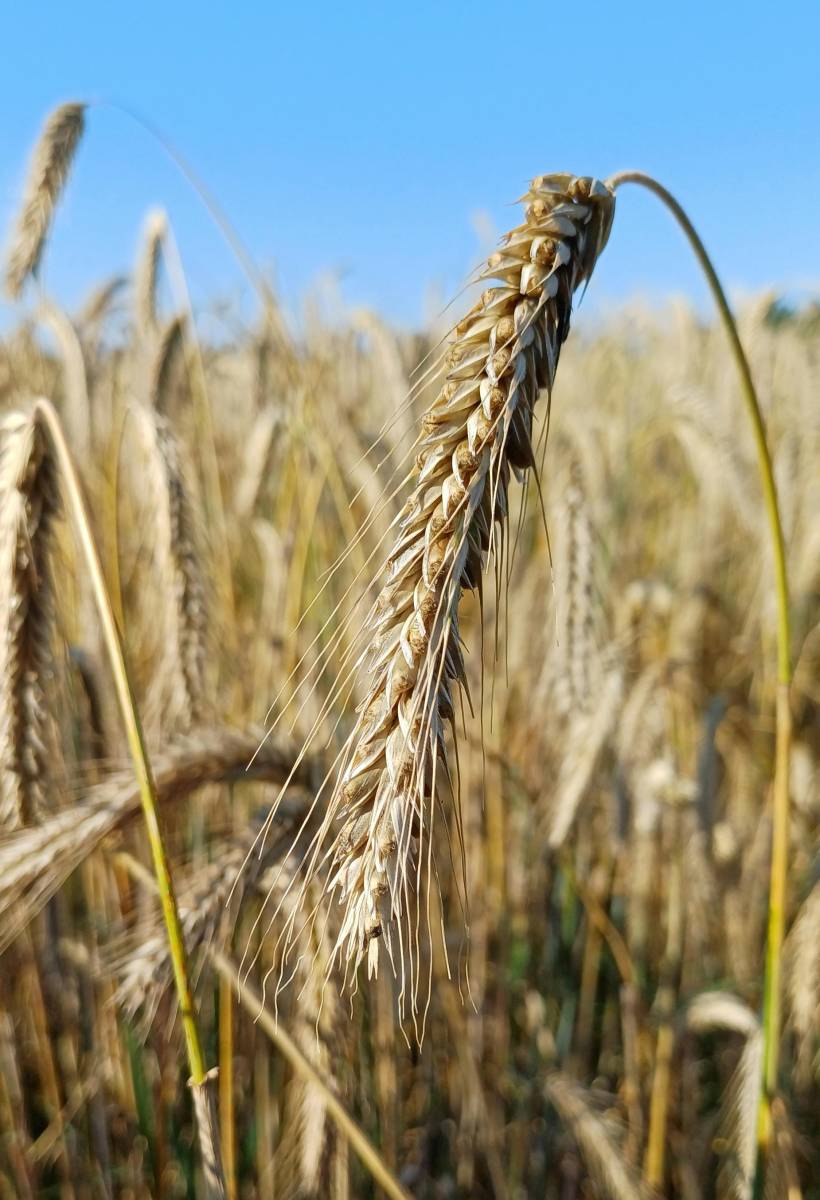
Spelt is an ancient cereal whose earliest traces date back more than 9,000 years. Spelt flour formed the basis of the diet of Latin populations; in fact, the French word farine (flour) derives from the Latin word for spelt, far.
Over time, the cultivation of spelt gradually declined and almost disappeared, replaced by higher-yield cereals such as wheat, rice, and corn. However, this vigorous grain requires neither fertilizers nor treatments against disease, making it ideal for organic farming.
Its nutritional qualities have therefore recently brought it back into the spotlight.
There are three types of spelt:
Petit épeautre de Haute-Provence or einkorn (Triticum monococcum), which grows harmoniously alongside lavender fields, has benefited from the Protected Geographical Indication (PGI) label since 2010 for the grain and since 2011 for the flour. It is the oldest and most genetically primitive variety, having undergone no reduction in diversity through domestication. Non-hybridized, it is also the easiest to digest.
In cooking, einkorn is an excellent alternative to pasta, rice, or wheat. Its delicate flavor pairs beautifully with salads, vegetables, and meats. It is also used to make bread and cakes.
Medium spelt of Tartary or emmer (Triticum dicoccum), also known as Farro or Emmer wheat, is more evolved and closer to durum wheat. Less common, it is mainly cultivated in Italy.
Great spelt (Triticum spelta), once known as “Gaulish Wheat” during the Roman Empire, is cultivated throughout southern Europe, particularly in Tuscany, where it also benefits from a PGI label. In France, it is grown in the Paris Basin, Burgundy, and Alsace.
Great spelt is more commonly used for flour because its dough rises better than einkorn flour. It is also found in soups, salads, risottos, and even certain beers. Even when fully cooked, spelt retains a slight crunch and pairs wonderfully with red wines.
Spelt thrives in poor soils and hilly regions between 300 and 1,000 meters above sea level. Thanks to its deep roots, it grows on dry and minimally fertilized land. Its growth cycle lasts 11 months: sowing takes place in autumn using hulled grains, and harvest occurs the following summer.
The plant is robust, resistant to cold, diseases, and pests, and does not require fertilizers or pesticides. Since it does not respond to nitrogen-based chemical fertilizers, it gradually disappeared from conventional agriculture.
One particularity of spelt is that its grain retains its husk after threshing, requiring an additional dehulling process. This, combined with relatively low yields, explains why it became less popular than wheat despite being highly valued during the Middle Ages.
Nutritionally, spelt is far more interesting than common wheat because it contains all eight essential amino acids. It is rich in minerals such as magnesium, iron, zinc, and calcium, as well as vitamins B1, B2, and B9.
Finally, spelt contains high-quality gluten, as it has not undergone the same selective breeding as modern wheat. As a result, some people with gluten sensitivities tolerate it more easily.
